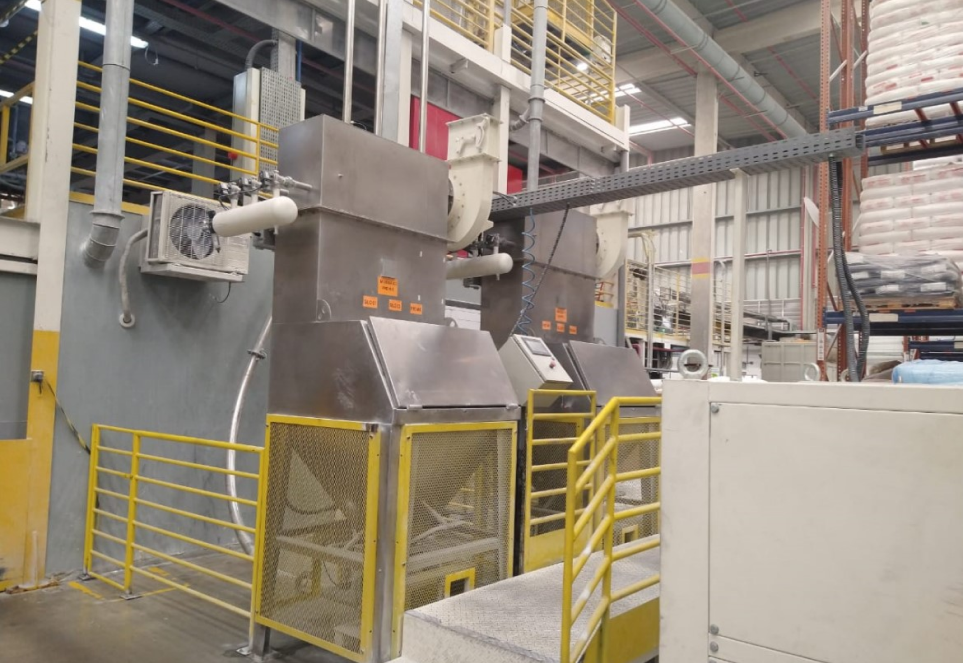
In recent years, concern over the handling and conveying of dust and grain with explosive characteristics has grown in Brazil, even though there’s little data documenting explosion cases involving these solid materials inside industrial plants.
But regardless of the lack of data, explosion risk should be a concern, varying according to the product, the concentration during handling or conveying, and the airflow rates.
For this reason, there are certain standards that need to be considered. They set criteria for how industrial equipment and instruments should be monitored and handled safely.
That’s why we’re covering the standards that apply to dust and grain handling in industry, along with technology recommendations for reducing explosion risk.
Factors That Affect the Severity of Dust and Grain Explosions
Five components need to be present for a dust and grain explosion to occur:
- Oxygen
- A confined space
- An ignition source
- Dispersion
- A fuel source (grain dust).
These elements together make up the dust explosion pentagon. As a result, grain handling creates an environment that can lead to combustion, followed by a dust explosion.
It’s worth noting that fine dust particles are the most explosion-sensitive, mainly because they stay suspended in the air and can ignite quickly, causing a rapid pressure increase.
In addition, friction sparks, static electricity, pulley friction, and hot work are ignition sources that are potentially present in grain handling environments and should therefore be avoided.
Are There Standards That Guide the Handling and Conveying of Dust and Grain?
In Brazil, there’s no specific standard for handling and conveying dust and grain in industrial processes. However, there are some regulations adopted mainly to prevent the explosion of dust stored in silos.
That’s the case with the ABNT / NBR 16.385 standard, in effect since 2015. It sets the safety requirements that must be followed when working with silos, preventing explosions — particularly of agricultural dust.
In this context, it’s worth remembering that powdered and bulk materials are typically stored in vertical silos. These materials are lifted to the top of the silo, and as they fall inside, they create suspended dust that increases explosion risk.
To prevent this, knowing the relevant standard is essential. Those responsible for the safety of handling, conveying, and storing dust and grain in silos need to take steps to reduce the risks, especially since explosions cause both material and human losses.
Among the measures worth highlighting are protecting the electrical components, controlling conveying acceleration, and installing explosion vent doors on bucket elevators, so that the material opens and the shockwave escapes through that opening.
Explosion panels also help preserve the equipment’s structural integrity and should be positioned so they don’t open inside the silo.
As it stands in Brazil today, the ABNT, IEC, and ATEX — Atmosphères Explosibles — standards are followed.
Solution: Dense Phase Pneumatic Conveying
As we’ve seen, mitigating explosion risk in dust and grain handling and conveying is a recurring need, highlighting the importance of a specific standard on the subject.
This means that, alongside full compliance with these standards, it’s up to industry to adopt new technologies that replace mechanical dust and grain handling and conveying processes with ones capable of delivering a much higher level of safety.
The solution here is to invest in dense phase pneumatic conveying, which offers several advantages, provided it’s properly sized.
Using a dense phase vacuum conveying system based on the full-line concept has some important characteristics for handling and conveying dust and grain prone to explosion.
These conveyors are made up of a pressure vessel and a conveying line, with fully sealed characteristics. In other words, there’s no possibility of solid material leaking out.
Beyond the conditions above, using a dense phase pneumatic conveying system provides a high level of safety, mainly by eliminating dust cloud conditions, ruling out cases of possible explosions.
As a result, using a dense phase pneumatic conveying system can make dust and grain handling and conveying much safer and more effective within an industrial plant.
To understand how the pneumatic conveying solution works, we invite you to check out our article on the topic.
![[Catálogo] Conheça nossos produtos! | Baixar catálogo | Globe Systems](https://blog.globesystems.com.br/wp-content/uploads/2021/03/catalogo.png "[Catálogo] Conheça nossos produtos! | Baixar catálogo | Globe Systems")