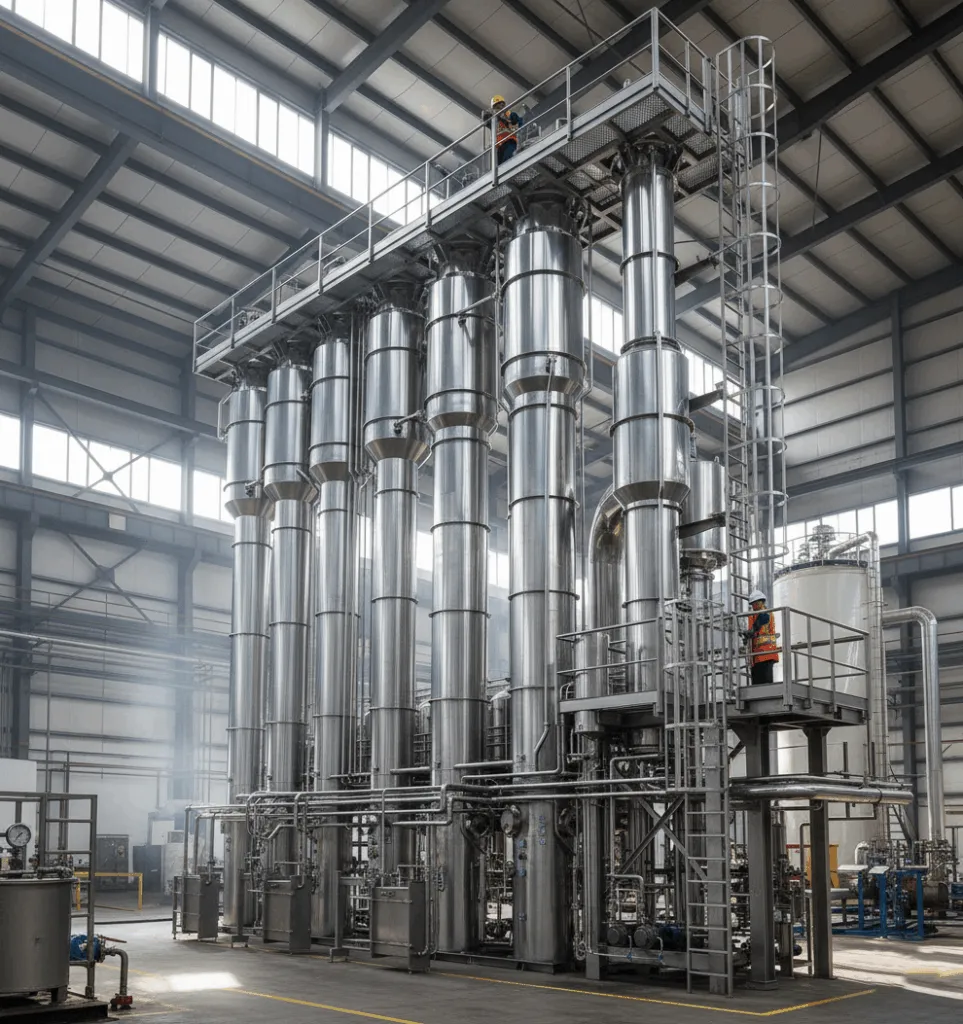
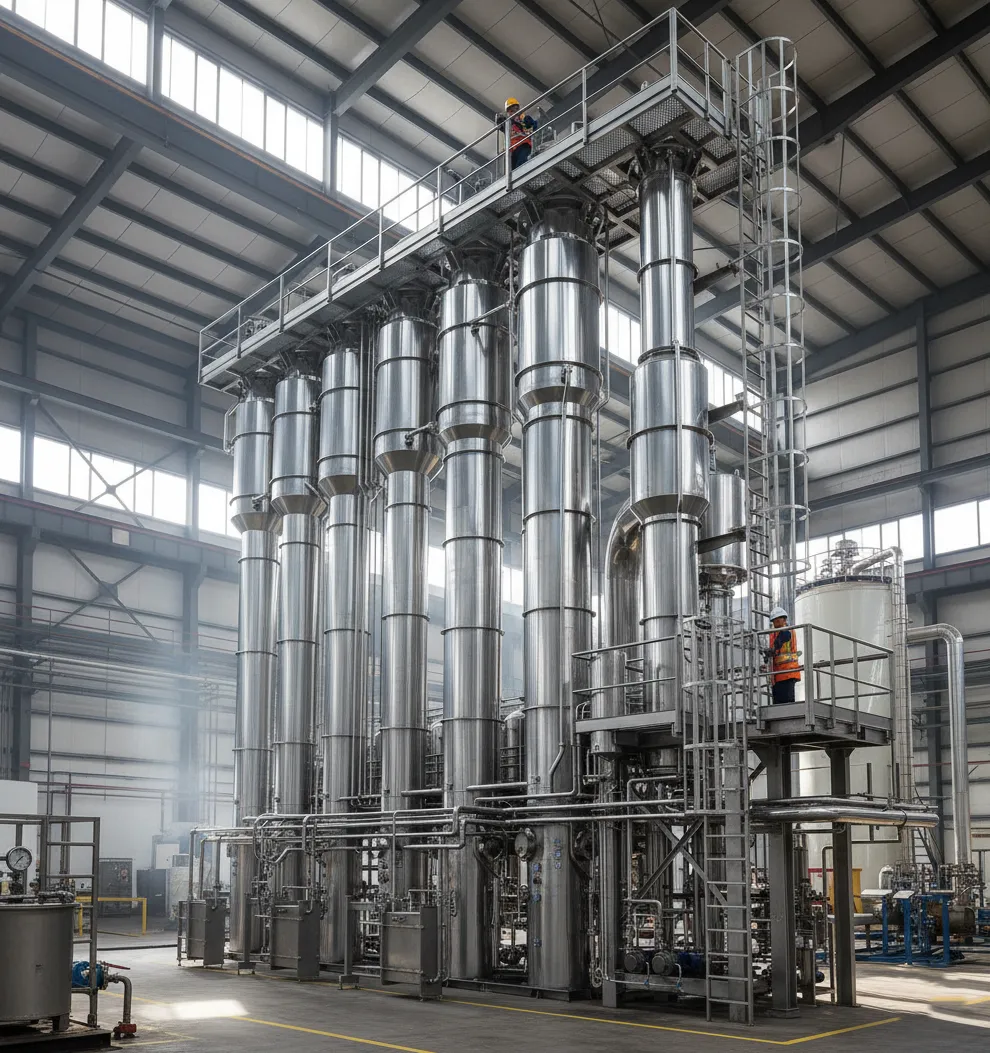
A evaporação industrial é uma das operações unitárias mais estratégicas para setores como alimentício, químico, farmacêutico, mineração, laticínios, bebidas e tratamento de efluentes. Sempre que uma planta precisa reduzir volume, concentrar sólidos, recuperar água ou padronizar um insumo, o evaporador industrial se torna um equipamento essencial dentro do processo.
Na Globe Systems, desenvolvemos evaporadores de concentração totalmente personalizados, porque cada produção apresenta comportamentos únicos — viscosidade, sensibilidade térmica, rendimento esperado, pureza exigida, limitações energéticas e metas ambientais. Nosso compromisso é integrar eficiência operacional, economia de energia e responsabilidade ambiental em soluções sob medida.
- O que é um evaporador industrial?
Um evaporador industrial é um equipamento projetado para remover água (ou outro solvente) de uma solução líquida, aplicando calor para provocar a evaporação e, assim, gerar um produto concentrado. Trata-se de uma operação clássica da engenharia química, descrita em diversas referências técnicas.
Durante o processo, a mistura líquida se separa em duas correntes principais:
- Vapor – que pode ser condensado e reaproveitado.
- Concentrado – com maior teor de sólidos ou componentes desejados.
Ele faz parte da família de tecnologias de troca térmica e separação por fase, sendo fundamental em processos que exigem concentração, padronização ou recuperação de insumos.
Evaporador industrial x evaporadora de ar-condicionado: qual é a diferença?
É comum que buscas por “evaporador” levem o usuário a informações sobre o ar-condicionado, por isso vale esclarecer:
No ar-condicionado (AVAC):
A evaporadora é o módulo interno. Ela resfria o ar, evaporando o fluido refrigerante em seu interior.
Na indústria de processos:
O evaporador concentra líquidos ao remover umidade por calor, vácuo ou diferença de pressão.
✔ No ar-condicionado: a evaporadora resfria.
✔ Na indústria: o evaporador concentra.
Essa diferenciação evita confusões comuns na etapa de pesquisa.
- Termos-chave: evaporação e concentração de líquidos
O que é concentrar um líquido?
Concentrar significa reduzir a quantidade de solvente (geralmente água) para aumentar o teor de sólidos ou compostos dissolvidos. Esse processo é essencial para indústrias que desejam:
- Reduzir custos logísticos e de armazenamento
- Padronizar produtos (Brix, proteína, viscosidade)
- Recuperar ingredientes
- Minimizar descartes
- Preparar o insumo para secagem, cristalização ou spray drying
Como funciona a evaporação industrial?
- O líquido é aquecido.
- O solvente evapora.
- O vapor é separado e pode ser condensado.
- O líquido restante se torna mais denso — o concentrado.
É um processo contínuo, altamente controlável e com excelente eficiência energética, especialmente quando aplicado com tecnologias modernas.
Tipos de evaporadores industriais
Evaporadores de múltiplo efeito
Sistemas com dois, três ou mais corpos evaporadores conectados.
O vapor gerado no primeiro efeito é reaproveitado como fonte de calor nos efeitos seguintes.
Benefícios:
- Redução drástica do consumo de vapor
- Operação altamente eficiente
- Economia energética significativa
Evaporador a vácuo
Operam em pressões reduzidas, permitindo evaporação em temperaturas mais baixas — ideal para produtos sensíveis ao calor.
Aplicações típicas:
- Extratos vegetais
- Aromas e corantes
- Laticínios (soro, leite, permeado)
- Nutrientes e bioativos
- Produtos químicos sensíveis
- Efluentes industriais concentrados
- Aplicações industriais dos evaporadores
Indústria alimentícia
- Concentração de sucos, polpas e xaropes
- Molhos, caldos, extratos
- Laticínios: soro, leite, bases proteicas
Tratamento de efluentes
- Redução de volume de resíduos
- Recuperação de água limpa
- Aproveitamento de subprodutos
Indústria química e farmacêutica
- Concentração de princípios ativos
- Recuperação e purificação de solventes
- Preparação para secagem e encapsulamento
Processos em baixa temperatura
Com evaporadores a vácuo, é possível preservar:
- Aromas
- Corantes naturais
- Nutrientes sensíveis
- Compostos bioativos
- Principais benefícios para sua planta industrial
✓ Eficiência energética
Evaporadores modernos, especialmente os de múltiplo efeito, reduzem consideravelmente o consumo de vapor e o custo operacional.
✓ Redução de custos
- Menos volume para transportar e armazenar
- Menos resíduos para descartar
- Recuperação de compostos valiosos
✓ Sustentabilidade industrial
- Reuso da água condensada
- Redução de resíduos
- Menor impacto ambiental
- Adequação às normas ambientais
✓ Flexibilidade de projeto – Cada processo industrial tem exigências únicas. A Globe Systems projeta evaporadores considerando:
- Teor final de concentração
- Viscosidade e comportamento térmico
- Corrosividade
- Limites energéticos
- Balanço térmico da planta
✓ ROI atraente – O investimento se paga por meio de:
- Economia de vapor
- Redução de descarte
- Recuperação de subprodutos
- Operação automatizada
- Reaproveitamento de água limpa
A experiência da Globe Systems
Desde 2003, a Globe Systems desenvolve evaporadores industriais customizados para:
- Alimentício
- Laticínios
- Ingredientes e aromas
- Químico
- Farmacêutico
- Mineração
Com clientes como Nestlé, Fini, M. Dias Branco, Pirelli e Instituto Butantan, e com a linha completa de erva-mate entregue à Triunfo do Brasil, oferecemos soluções robustas, eficientes e alinhadas às mais altas exigências de operação contínua.
Se sua indústria precisa concentrar líquidos, recuperar água, reduzir perdas ou aumentar o valor agregado do produto, um evaporador industrial sob medida pode transformar completamente o processo.
A Globe Systems analisa cada aplicação de forma técnica, energética e econômica para indicar o evaporador mais eficiente para sua planta.
Fale com a Globe Systems e descubra qual evaporador é ideal para o seu processo.
Caso real: evaporação na Triunfo do Brasil
A Globe Systems projetou, fabricou e instalou a linha da Triunfo do Brasil com evaporador de múltiplo efeito antes do spray dryer.
Perguntas frequentes
O que faz um evaporador de concentração?
Retira parte da água de um líquido por aquecimento, normalmente a vácuo, para aumentar o teor de sólidos, reduzir volume e preparar o produto para secagem.
Quanto vapor um evaporador consome?
Como referência, em kg de vapor por kg de água evaporada: simples efeito 1,0 a 1,3; duplo 0,55 a 0,70; triplo 0,35 a 0,50. Com TVR ou MVR o consumo cai ainda mais.
Qual o maior evaporador que a Globe já entregou?
A linha completa de erva-mate da Triunfo do Brasil, da extração à secagem.