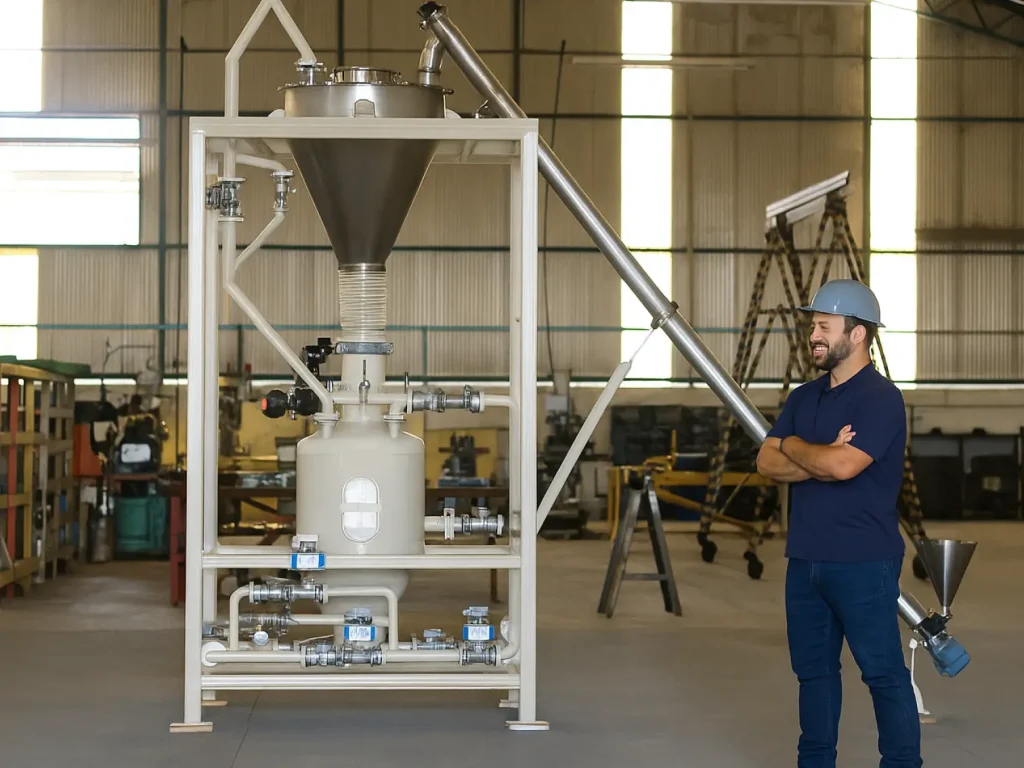
O transporte pneumático fase diluída é um dos sistemas mais utilizados na movimentação industrial de materiais sólidos em pó e granulados. Caracterizado pelo deslocamento de partículas em suspensão no fluxo de ar — com alta velocidade e baixa concentração de sólidos — o transporte pneumático fase diluída oferece simplicidade de instalação, versatilidade e custo inicial reduzido, sendo a escolha adequada para uma ampla gama de materiais e configurações de planta.
O Que é Transporte Pneumático e Como os Sistemas se Diferenciam
O transporte pneumático é um sistema hermético que promove o deslocamento de materiais sólidos por meio do fluxo de ar, de um ponto de origem a um destino dentro da planta industrial. Existem dois sistemas principais com princípios de funcionamento distintos: a fase diluída e a fase densa.
A escolha entre os dois depende das características físicas e químicas do material, da distância percorrida, da capacidade necessária e da fragilidade do produto. Um dimensionamento incorreto resulta em entupimentos, degradação do material e consumo energético acima do esperado.
Transporte Pneumático Fase Diluída
No transporte pneumático fase diluída, os sólidos são transportados em suspensão no fluxo de ar com velocidades geralmente entre 25 e 50 m/s e baixa concentração de material na linha. O sistema utiliza grandes volumes de ar para movimentar quantidades relativamente menores de sólido — resultando em uma razão sólido/ar significativamente menor do que nos sistemas de fase densa.
É o sistema indicado para materiais com as seguintes características:
- Partículas não muito frágeis — que tolerem alta velocidade de transporte sem degradação
- Características granulares ou cristalinas
- Baixa ou nenhuma abrasividade
- Ampla variedade de densidades e tamanhos de partícula
Transporte Pneumático Fase Diluída Positiva e Negativa
O transporte pneumático fase diluída pode ser operado sob pressão positiva ou negativa (vácuo), dependendo da configuração da planta e das necessidades do processo.
Fase Diluída com Pressão Positiva
Na fase diluída com pressão positiva, um soprador localizado no início da linha “empurra” a mistura ar/material até o destino. É o método mais utilizado para partículas secas e não abrasivas. Ideal para plantas com um ponto de origem e múltiplos destinos de descarga.
Fase Diluída com Pressão Negativa (Vácuo)
Na fase diluída com pressão negativa, uma bomba de vácuo acoplada a um filtro/receptor no destino “puxa” a mistura ao longo da linha. É o método mais adequado para plantas com vários pontos de coleta e um único destino — como na retirada de matéria-prima de caminhões ou containers para silos de estocagem — e para materiais que se compactam quando pressionados.
Não sabe qual sistema é ideal para o seu processo?
A Globe Systems dimensiona sistemas de transporte pneumático fase diluída e fase densa para indústrias de todo o Brasil. Receba uma análise técnica sem compromisso.
Vantagens do Transporte Pneumático Fase Diluída
A principal característica do transporte pneumático fase diluída é a simplicidade operacional e de instalação. Entre os principais benefícios:
- Menor custo inicial: a menor complexidade em relação à fase densa resulta em investimento de aquisição e instalação reduzido.
- Versatilidade de materiais: aceita praticamente qualquer tipo de material, independentemente de tamanho, forma ou densidade — desde que não seja excessivamente frágil ou abrasivo.
- Facilidade de manutenção: menos componentes de precisão significa manutenção mais simples e menor tempo de parada.
- Flexibilidade de layout: adapta-se facilmente a diferentes configurações, com múltiplos pontos de origem ou destino dentro da mesma planta.
Limitações do Transporte Pneumático Fase Diluída
O transporte pneumático fase diluída apresenta limitações que devem ser consideradas no dimensionamento. A alta velocidade de transporte aumenta o risco de degradação de materiais frágeis — como granulados, pellets ou cristais — e gera maior desgaste na tubulação com materiais abrasivos. O consumo energético também é superior ao da fase densa, pelo maior volume de ar movimentado.
Para materiais frágeis, sensíveis ao calor ou com alta abrasividade, o sistema de fase densa costuma ser mais indicado. Segundo parâmetros amplamente adotados na engenharia de processos, a seleção correta entre os sistemas deve sempre considerar a razão de mistura, a velocidade de transporte e as propriedades físicas do material — conforme diretrizes técnicas da ISO para sistemas de transporte industrial.
Globe Systems: Dimensionamento de Transporte Pneumático Fase Diluída
Na Globe Systems, o dimensionamento de sistemas de transporte pneumático fase diluída é conduzido pela equipe de engenharia com base nas características específicas de cada processo: tipo e granulometria do material, vazão necessária, distância de transporte, configuração da planta e requisitos sanitários do setor.
Para entender as diferenças completas entre os sistemas disponíveis, consulte também nosso artigo sobre conceitos e aplicações do transporte pneumático.
Conheça o sistema de transporte pneumático da Globe Systems.
Fase diluída ou fase densa — a Globe Systems dimensiona e fabrica o sistema certo para o seu processo, com suporte técnico completo do projeto à operação.
Perguntas frequentes
O que é transporte pneumático em fase diluída?
É o transporte em que o pó viaja em suspensão no ar, em alta velocidade, por pressão positiva ou por vácuo.
Quando usar fase diluída?
Para pós leves e não abrasivos. Por pressão positiva atende longas distâncias e vários destinos; a vácuo, coleta de vários pontos e alimenta uma máquina sem vazamento de pó.
Quando a fase densa é melhor?
Para produtos frágeis ou abrasivos, como açúcar cristal, sílica e areia, porque transporta em baixa velocidade e reduz quebra e desgaste.
Quem projeta o sistema completo
A Globe Systems projeta, fabrica e instala sistemas de transporte pneumático industrial chave na mão: recepção de big bags e sacaria, silos, dosagem, transporte em fase densa ou diluída e alimentação de máquinas. Na Liane Alimentos, a planta recebe 59 t/h de pó e é operada por uma pessoa. Veja outros projetos de referência.