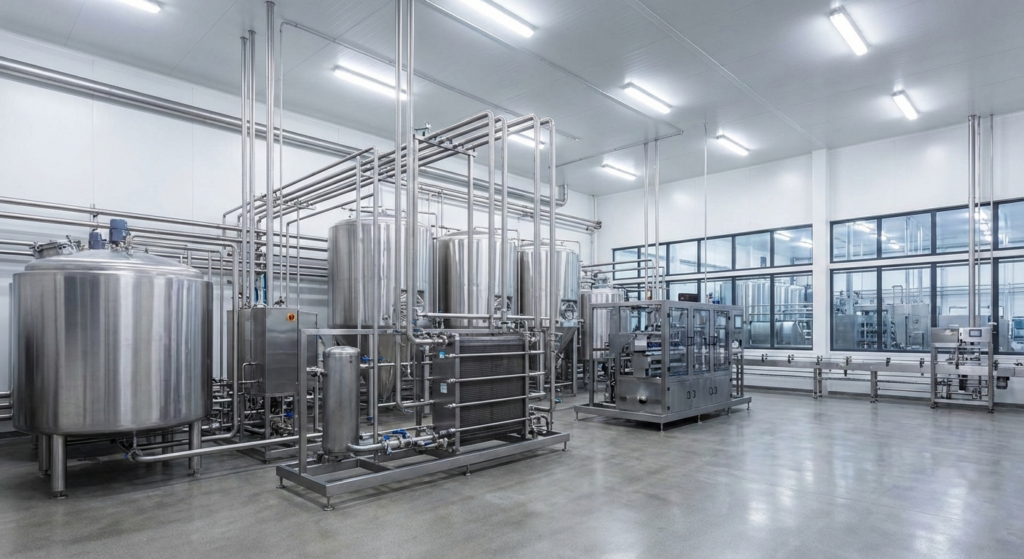
The production of WPC (Whey Protein Concentrate) and MPC (Milk Protein Concentrate) has gained prominence in recent years, with more and more dairy plants looking to make the most of the value of whey and whole milk. In this article, we explore how these two protein solutions can be an excellent opportunity to add value to your processes and product portfolio.
What Are WPC and MPC, and Why Do These Ingredients Generate So Much Interest in the Industry?
WPC and MPC are protein concentrates from whey and whole milk, respectively. They’re high-nutritional-value ingredients widely used in functional foods, supplements, and even pharmaceutical products.
-
WPC: produced from whey, it contains highly soluble proteins, making it an excellent source of essential amino acids.
-
MPC: obtained from whole milk, it offers a more balanced protein profile, combining whey and casein proteins.
These ingredients have become increasingly popular due to the growing market for high-quality proteins and rising demand for healthy products.
Why Don’t More Dairy Plants Produce WPC or MPC?
Despite the profit potential, many dairy plants still don’t produce WPC or MPC. Some of the main barriers include:
-
Process Complexity: producing these concentrates requires specialized equipment, such as membrane filtration, evaporators, and spray dryers.
-
Initial Investment: the cost of implementing new processing technologies can be high, especially in plants that lack adequate infrastructure.
-
Lack of Process Knowledge: dairy plants often aren’t aware of the advantages and technical details needed to implement these processes efficiently and safely.
That said, there are significant optimization opportunities, and the good news is that the process can be modular and scalable.
Overview of the WPC and MPC Production Process
Producing WPC and MPC involves three main stages: membrane filtration, evaporation, and spray drying. Let’s take a look at each one:
Membrane Filtration: The First Step to Concentrating Proteins
Ultrafiltration and nanofiltration are used to concentrate the proteins in milk or whey. These filtration systems remove most of the water and soluble substances while keeping the proteins intact and concentrated.
-
Advantage: Allows precise control of protein concentration, resulting in a high-quality final product.
-
Flexibility: The system can be adjusted to different concentration levels, depending on the customer’s needs.
Evaporation: Efficiency Before the Drying Stage
After filtration, the protein concentrate undergoes vacuum evaporation, where water is efficiently removed, reducing the liquid’s volume.
-
Volume Reduction: The evaporation process further concentrates the proteins, preparing the product for drying.
-
Energy Gain: Using multiple-effect evaporation systems allows for a significant reduction in energy consumption.
-
Importance: Properly done evaporation ensures the protein concentrate has the ideal properties for the next drying stage.
Spray Dryer: Turning the Concentrate into Powder with Control and Quality
In the final stage, the concentrate is fed into a spray dryer, where it’s sprayed and quickly dried to form a high-quality protein powder.
-
Total Control: The spray dryer allows precise control of temperature and airflow, ensuring the final product has the ideal texture and stability.
-
Standardization: Spray drying helps create a final product with consistent quality, essential for meeting food and pharmaceutical industry standards.
Producing WPC and MPC at Scale: Common Process Challenges
Although the process may seem simple, there are several production challenges that need to be addressed to achieve efficient production:
-
Increased Capacity: In many cases, plant capacity isn’t enough to meet growing demand.
-
Product Standardization: Ensuring each batch of WPC or MPC has the same quality and characteristics.
-
Reduced Energy Consumption: Optimizing energy use at every stage of the process is crucial for economic viability.
-
System Integration: It’s important for the filtration, evaporation, and drying systems to work together seamlessly to ensure maximum efficiency.
Where Are the Optimization Opportunities for Those Already Producing WPC or MPC
For those already producing WPC or MPC, optimization opportunities include:
-
Increased Capacity: Investing in modular systems that can scale with demand.
-
Process Standardization: Improving the consistency of the final product by adjusting operating parameters.
-
Reduced Operating Costs: Using cutting-edge technologies to reduce energy consumption and improve production efficiency.
Why Every WPC or MPC Project Needs a Personalized Evaluation
Every plant has unique needs and characteristics. That’s why WPC or MPC production should be evaluated on a case-by-case basis, taking into account:
-
Production Goals: The required volume, final product quality, and customer specifications.
-
Required Technologies: The choice of evaporator type, filtration membranes, and spray dryer model should be based on the specific production process.
-
Plant Infrastructure: The project may include a retrofit of existing equipment or the construction of a new production line, depending on the plant’s situation.
When Does It Make Sense to Start a WPC or MPC Production Project?
The decision to start producing WPC or MPC should be based on some key factors:
-
Market Signal: If the market demands more high-value products, producing WPC or MPC can be an excellent opportunity.
-
Installed Capacity: If the plant is already underutilized or has room to grow, adding protein production can be advantageous.
-
Byproduct Utilization: WPC and MPC are an excellent way to make use of whey, a byproduct that’s often wasted.
WPC and MPC as a Value Strategy for Dairy Plants
Producing WPC and MPC gives dairy plants the chance to add value to milk and whey, making the most of their resources. With the right technology and proper planning, this can be an excellent strategy for increasing profitability and meeting growing demand for high-quality ingredients.
Before investing, understanding the process and its variables is essential. A technical conversation can help assess whether producing WPC or MPC makes sense for your plant, and at what scale